
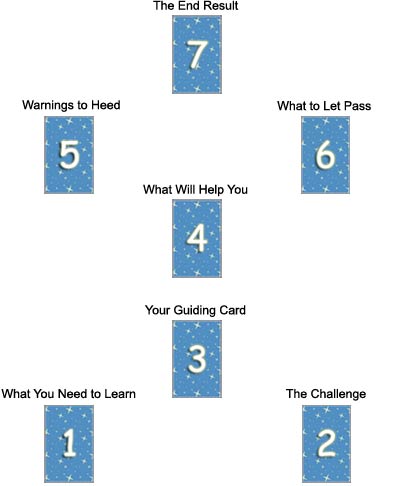
The second Path layout is a seven-level design that yields insight to achieve a high level of personal and spiritual growth. The roots of the tree, shown in the first two tiles, suggest what you need to learn and where the challenge lies. Growing upward, the next two tiles are about the forces that guide you and what will help boost your growth. The next two tiles show the lower branches of the tree, which provide warnings about what you need to let go of in order to maximise your progress. Finally at the top of the tree, we come to the outcome, showing where this growth process will ultimately lead.
The End Result
 Bamboo 8 |
||
Warnings You Should Heed
 Plum Blossom |
That Which You Should Let Pass
 Bamboo 4 |
|
What Powers Will Help You
 Wan 3 |
||
Your Guiding Tile
 Circles 7 |
||
What You Need to Learn
 East Wind |
The Challenges Before You
 Bamboo 6 |
What You Need to Learn
The East Wind tile represents you. Tiles adjacent to the East tile in a reading should be given added weight.
Green, spring, wood, dragon
The Water tile is about communication and traveling. You may be looked to for advice on something regarding your unique experience.
The Insect represents gain in the short term. It suggests temporary work, small projects, and perhaps freelance. There will be short term gains, but don't rely upon this for too long. This is a transitional time when you should be planning for the future.
The Earth tile signifies land and stability, a solid base that can be built upon. Or perhaps this base is already built and in fact thriving. In any case it represents security and self-sufficiency.
The Plum represents spring, youth, innocence, inexperience, and childlike happiness. It may be a sign that you need a fresh perspective on something. Something in your life may need to be re-evaluated.
The Carp signifies peace, contentment, tranquillity, and freedom from the pressures of everyday life. The tile's vibrant colours symbolise a gain of material and/or spiritual wealth.
The Mushroom represents variety and uniqueness. It reminds that surprises can spring up anyplace at any time and leave lasting impressions. Persistence, progress, and regeneration are strong with this sign.